Why Your Summerville Yard Holds Water After Heavy Rain, And What to Do About It
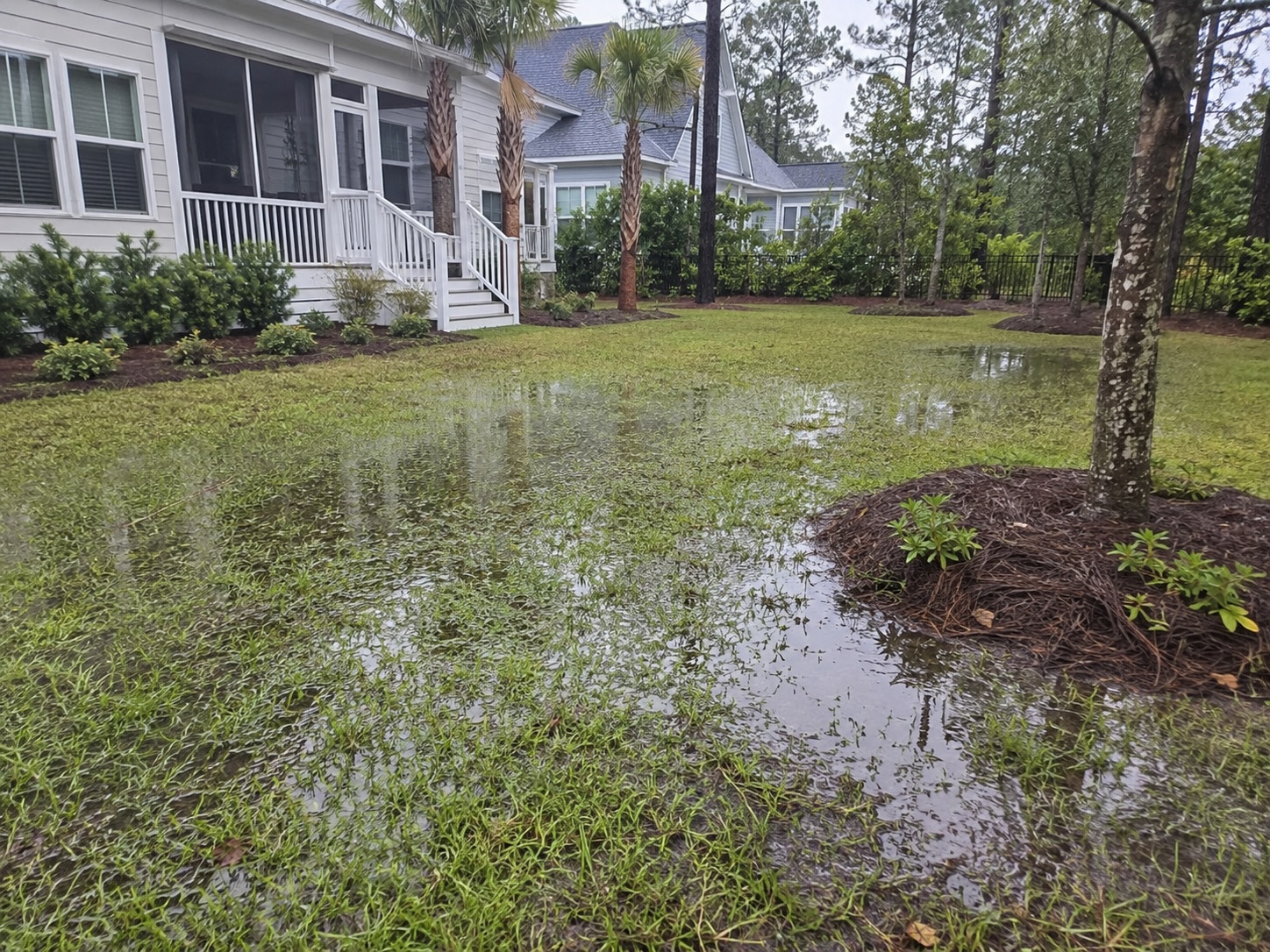
If your backyard turns into a swamp after every summer storm, you're dealing with one of the most common complaints we hear from homeowners across Summerville, Cane Bay, Nexton, and Summers Corner. Standing water, soggy grass, and muddy low spots are frustrating. In the Lowcountry, they are also incredibly common.
But common doesn't mean acceptable. Left alone, poor yard drainage causes real damage: foundation problems, rotting landscaping, mosquito breeding grounds, and expensive repairs down the road. For homeowners searching for yard drainage in Summerville, SC, the first step is understanding where the water is coming from and why it is not moving off the property properly.
Why Summerville Yards Hold Water After Heavy Rain
The Lowcountry has a handful of factors working against good drainage, and most yards here are dealing with more than one of them at once.
Flat terrain. A large portion of Summerville and Dorchester County sits on level ground. Without natural slope, water has nowhere to go. It just sits.
Clay-heavy soil. Clay-heavy soil drains slowly. Once compacted, it holds moisture near the surface and can cause water to spread across the yard during heavy rain. This is one of the biggest drainage challenges in the Charleston area.
Summer storms. The Lowcountry gets intense, fast-moving thunderstorms that can drop several inches of rain in a matter of hours. Even healthy soil can't keep up with that kind of volume.
New construction and development. Neighborhoods like Cane Bay, Nexton, and Summers Corner have grown quickly. New construction compacts soil, alters natural drainage flow, and increases the amount of hard surface on a lot. That runoff has to go somewhere, and it often ends up in your yard.
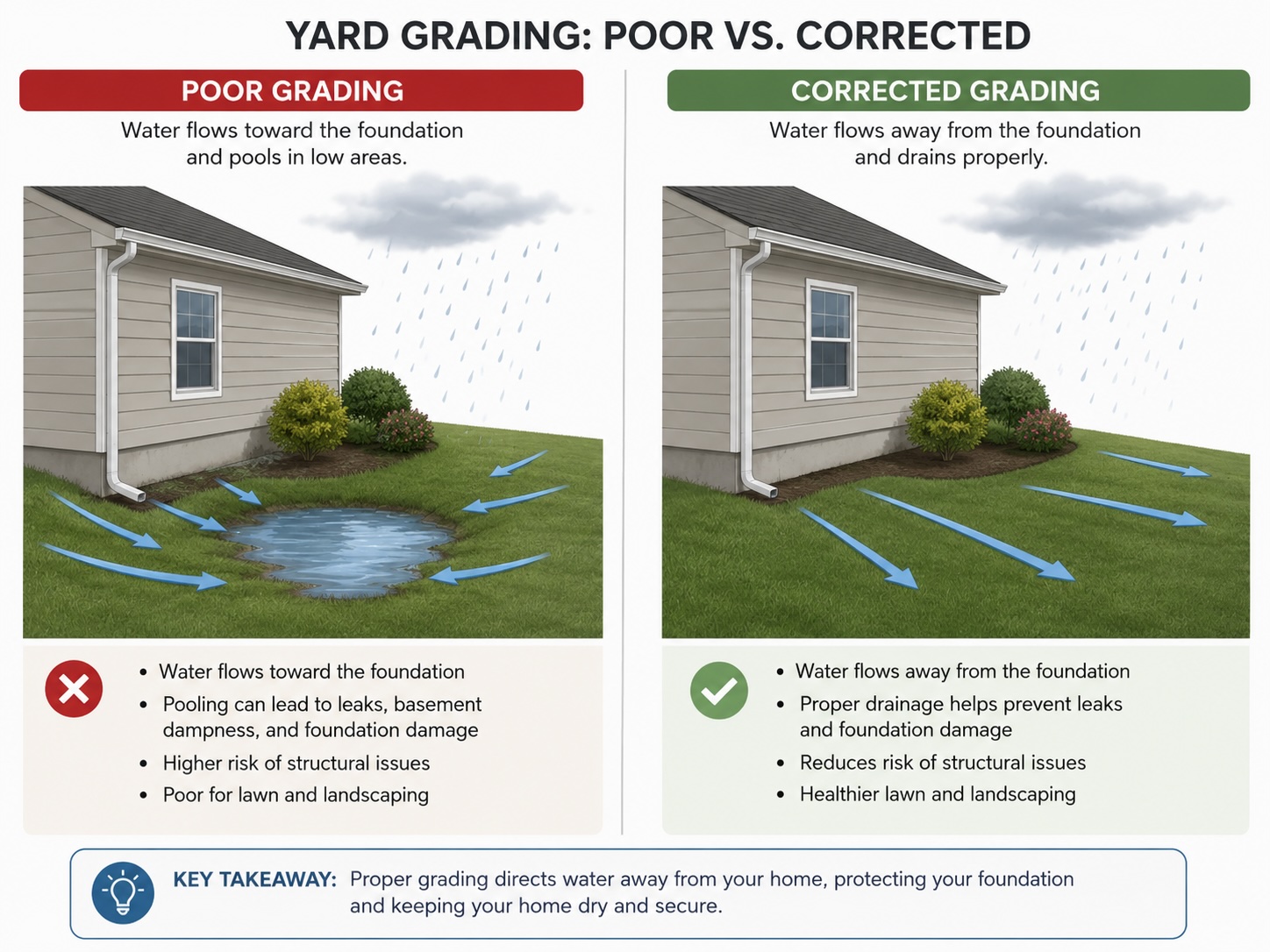
Poor grading. Whether from the original builder or years of settling, many yards in this area slope toward the house instead of away from it.
Common Signs You Have a Yard Drainage Problem
Some drainage issues are obvious. Others build slowly until they become expensive. Watch for these:
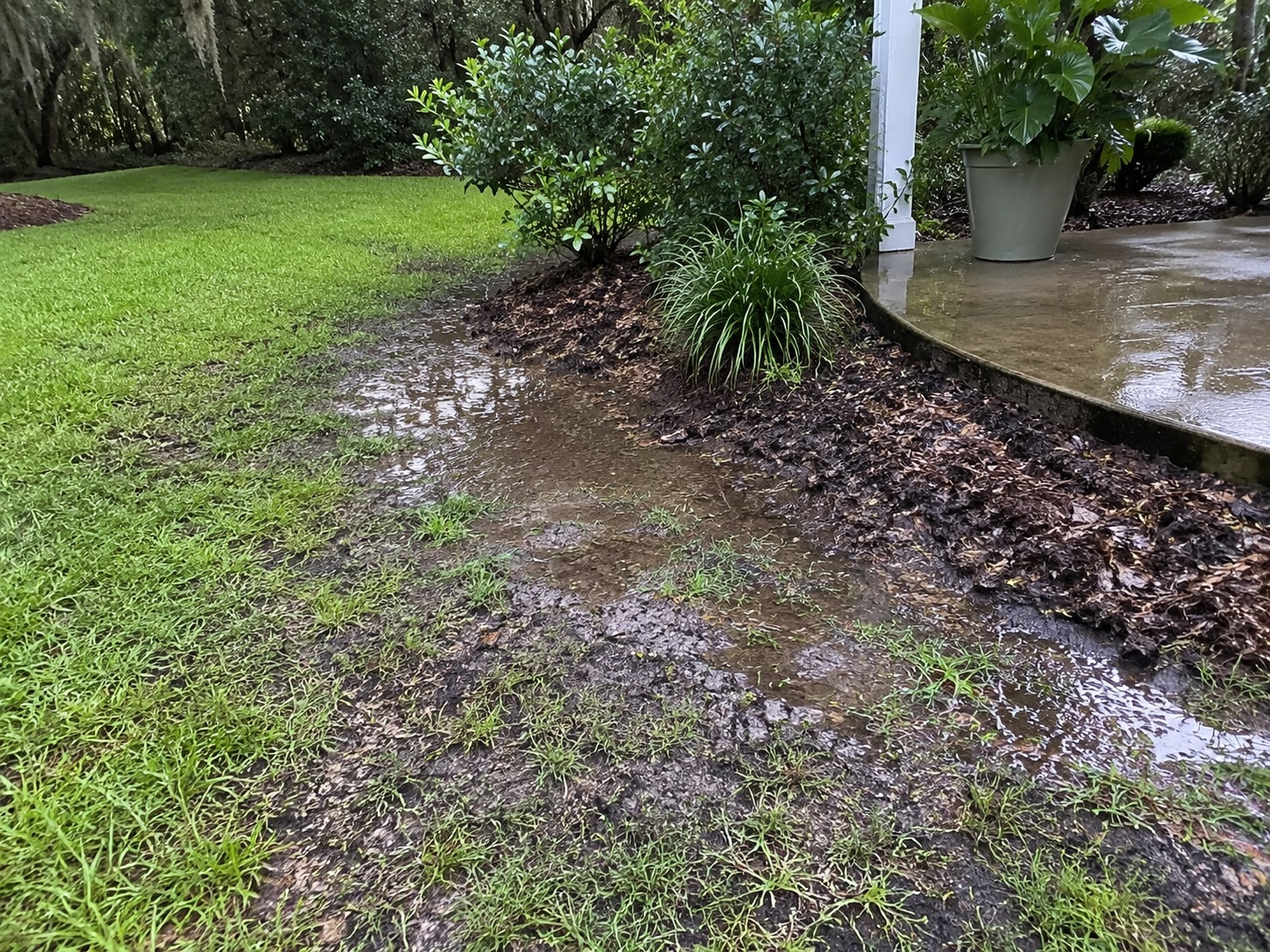
Standing water that sits for more than 24 to 48 hours after rain
Consistently soft, soggy, or muddy areas
Water pooling near your foundation or crawl space vents
Mulch washing out of beds after every storm
Patchy or thinning grass in low areas of the yard
A mildew or musty smell near the home
Mosquito problems that seem worse than your neighbors'
Water flowing toward your patio, driveway, or outdoor living area instead of away from it
If several of these apply to your yard, it's worth getting a professional set of eyes on the property before the problem gets worse, or before you invest in new landscaping or hardscape over drainage that hasn't been resolved.
What Causes Standing Water in Your Yard?
Most drainage problems have more than one contributing factor. Here are the most common culprits.
Poor Grading
Grading controls where water flows across your yard. When the slope runs toward the house instead of away from it, water follows. Over time, settling and erosion can make this worse even in yards that were graded correctly at first.
Compacted Soil
Heavy clay soil compacted by mowing, foot traffic, or construction equipment becomes nearly impermeable. During a hard rain, water has nowhere to go but the surface.
Downspouts Discharging Too Close to the Home
Your gutters collect a large volume of water during a storm. If your downspouts terminate at the foundation with no outlet, that water saturates the soil right where you least want it.
Low Spots
Natural settling and uneven grading create depressions in the yard that act like bowls. These spots collect water from the surrounding area and hold it long after everything else has drained.
Hardscapes Without Drainage Built In
Patios, driveways, and retaining walls can redirect the natural movement of water across your yard. Without drainage accounted for in the design, that water often ends up concentrated near the foundation or flowing toward areas that weren't intended to receive it.
No Drainage System
Many yards, including new construction in established and newer communities alike, were never set up with drainage infrastructure. Surface water has no outlet, so it accumulates.
Best Drainage Solutions for Lowcountry Yards
There is no universal fix. The right solution depends on your specific property: the slope, soil, water source, volume of runoff, and where the water needs to go. Here are the most effective options for homes in this area.
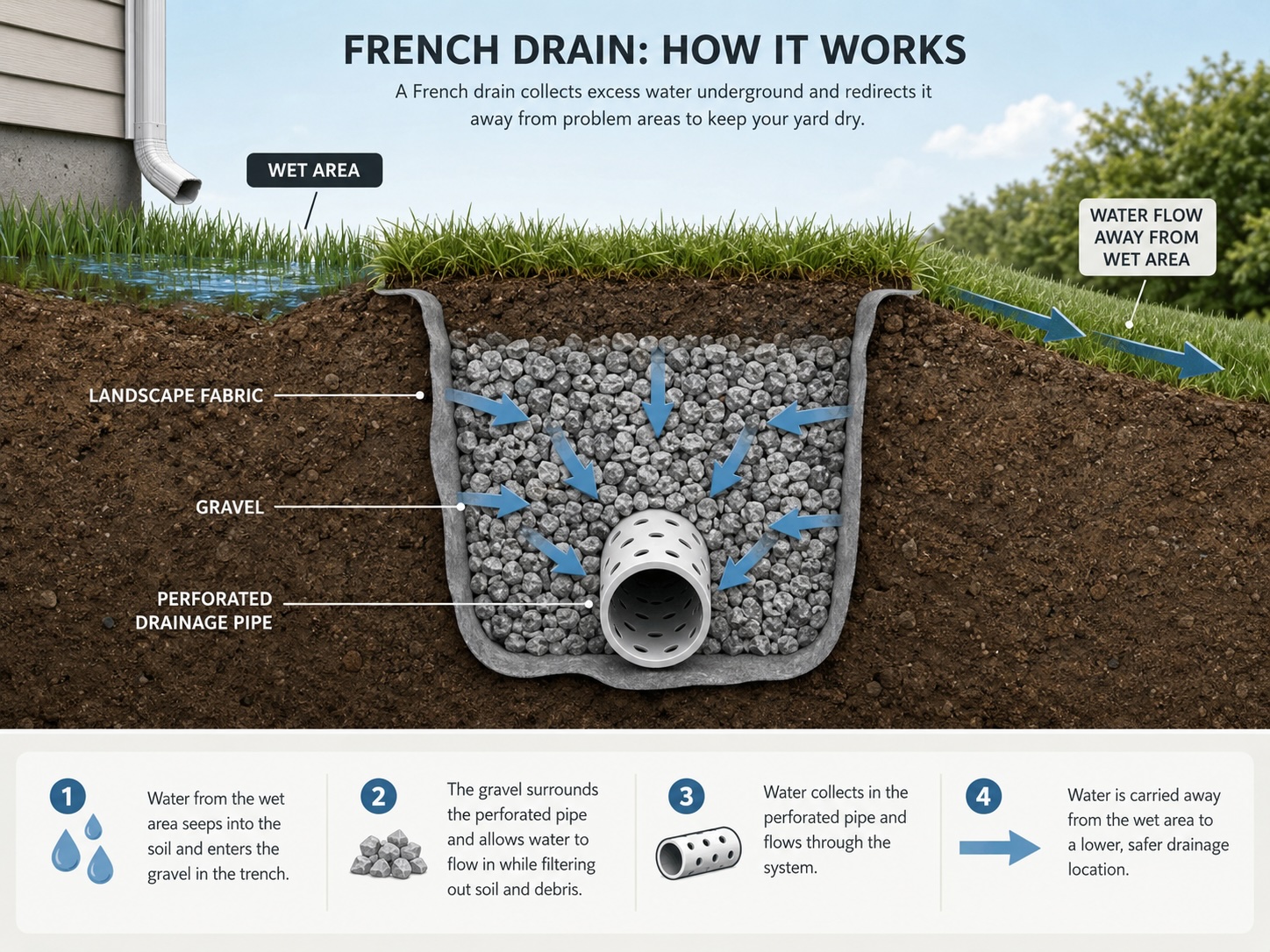
French Drains A perforated pipe in a gravel-filled trench that intercepts groundwater and surface runoff, redirecting it to a safe discharge point. One of the most effective solutions for persistently wet areas and high water tables.
Catch Basins Surface inlets installed at low spots or near downspouts to collect pooling water and move it through underground pipe to an outlet. Ideal when the problem is concentrated in specific areas.
Downspout Extensions and Underground Pipe Moving roof runoff away from the foundation through buried solid pipe is one of the simplest and most cost-effective drainage improvements available. It's often the right first step before anything else.
Grading and Regrading Reshaping the yard so water flows away from structures and toward appropriate outlets. Often the foundation of any drainage improvement plan.
Swales Shallow, sloped channels that guide water across the yard to a discharge point. They can be functional and attractive when designed and planted correctly.
Dry Creek Beds A practical and visually appealing way to channel storm water through the landscape. They sit quiet most of the year and handle runoff when it matters.
Erosion Control On sloped areas, rock, retaining walls, and ground cover plantings stabilize soil and prevent washout where water moves at speed.
The key is assessing the whole picture first. A French drain installed in the wrong location, or a catch basin with nowhere to discharge, won't solve your problem.
Do You Need a French Drain?
French drains come up in almost every drainage conversation, and for good reason. For homeowners researching French drain options in Summerville, SC, here's a straightforward answer.
A French drain makes sense when you have a yard that stays wet for extended periods, water entering from a neighboring property, a high water table, or persistent wet areas that grading alone hasn't solved.
It's not always the right first step, though. If your main issue is a grading problem or downspouts discharging at the foundation, those need to be addressed first. In many yards, the right fix is a combination of solutions working together. A thorough site assessment will tell you what your property actually needs.
Fix Drainage Before You Invest in New Landscaping or Hardscaping
This is worth saying plainly: drainage problems don't fix themselves. And installing new sod, a patio, a planting bed, or any other outdoor improvement over an unresolved drainage issue is a setup for expensive corrections later.
New sod installed in a chronically wet area will fail within a season. A patio built without drainage behind it develops puddles, heaving, and long-term structural issues. Retaining walls without proper drainage can fail under water pressure. Mulch beds wash out every time it rains until the water flow is addressed.
If you're planning any significant landscape or hardscape project, drainage should be evaluated first. It protects everything you're about to invest in.
When to Call a Drainage Contractor in Summerville, SC
Some drainage fixes are manageable for a homeowner with experience. Extending a downspout, adding a simple surface drain, or making minor grading corrections can be reasonable DIY work.
But there are situations where professional assessment is the right call:
Water pooling within 6 to 10 feet of your foundation
Problems that have returned after previous attempts to fix them
Standing water that remains for days after a storm
Signs of foundation moisture, crawl space humidity, or mold
A yard with significant slope changes, retaining walls, or complex grading
Any time you're planning new landscaping or hardscape and want drainage solved before the project begins
A qualified drainage contractor assesses slope, soil, water source, and discharge options before recommending anything. The goal is a permanent fix, not a patch.
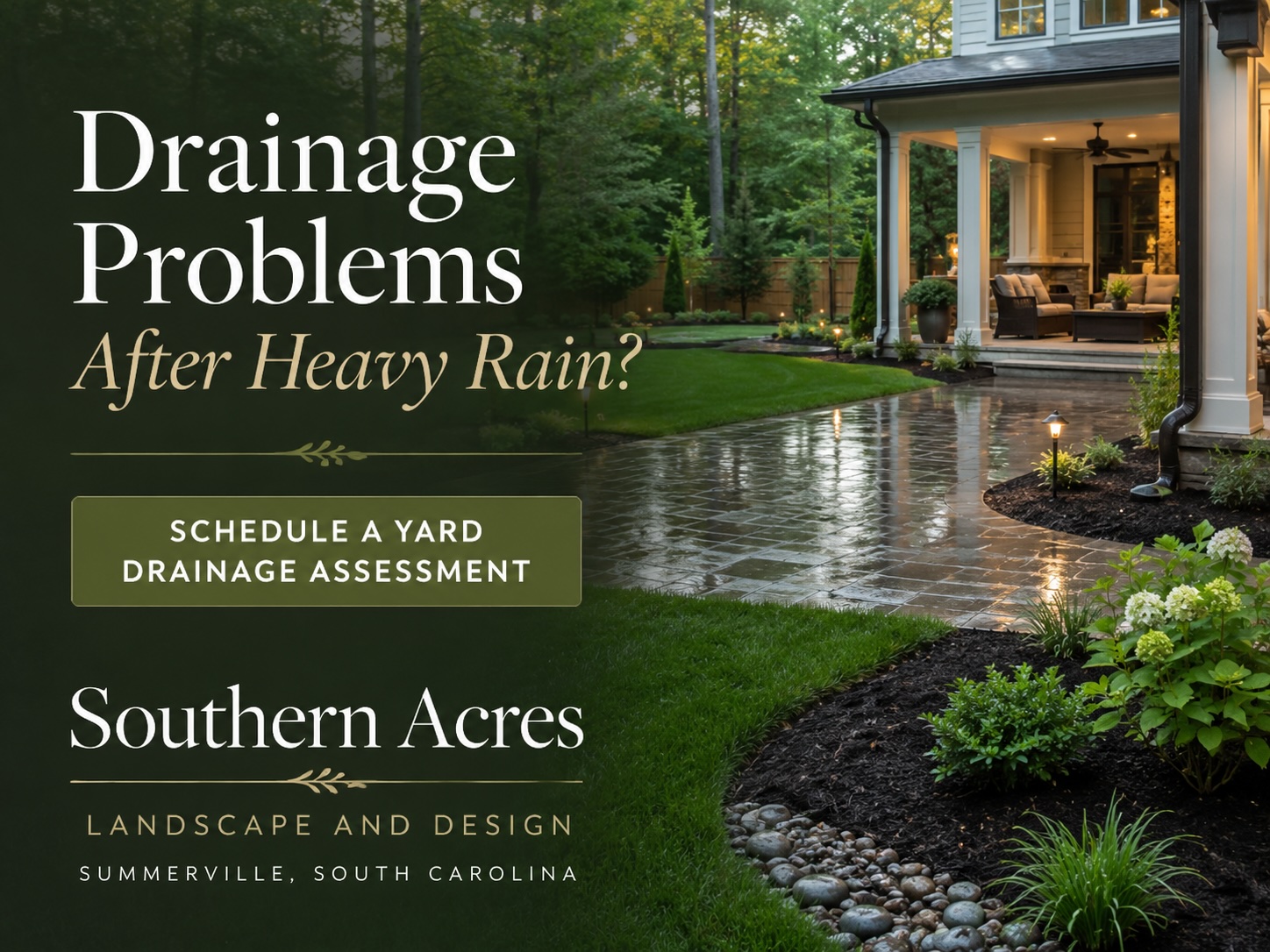
Yard Drainage in Summerville, SC: Schedule an Assessment With Southern Acres
If your yard stays wet after every storm, do not guess your way through the problem. Southern Acres Landscape and Design can assess where the water is coming from, explain what your property needs, and recommend a drainage plan that protects your yard, landscaping, and future outdoor living projects.
We work with homeowners throughout Summerville, Cane Bay, Nexton, Summers Corner, and Dorchester County. We look at the full picture before recommending any solution, and because we also handle hardscaping, landscape design, and outdoor living projects, drainage gets built into the plan from the start.
Frequently Asked Questions
Why does my yard hold water after it rains?
The most common causes in the Summerville area are flat terrain, clay-heavy soil that drains slowly, low spots in the yard, and the absence of a functional drainage system. Most homeowners are dealing with a combination of these at once.
Is standing water in my yard a problem?
Yes. Beyond being an eyesore, standing water can damage your foundation and crawl space, kill your grass and plantings, accelerate erosion, attract mosquitoes, and undermine patios and retaining walls over time.
How long should water stay in my yard after rain?
Surface water should drain or absorb within 24 to 48 hours after a moderate to heavy storm. If water is still sitting two or more days after rain, your yard has a drainage issue worth addressing professionally.
Do French drains work in Summerville, SC?
Yes, they work well in many Summerville properties, particularly for yards with high water tables, saturated soil, or water coming in from adjacent lots. They're not the right solution in every situation. The right approach depends on your specific yard and where the water is coming from.
Can landscaping fix drainage problems?
Strategic landscaping can improve drainage significantly. Regrading, swales, dry creek beds, and proper planting design are all legitimate tools. More significant drainage problems typically require engineered solutions as well, such as French drains or catch basins, alongside landscape adjustments
